Research modules

Vascular aging to regenerative control

Two programs connect single-cell maps, vascularized models, and clinical repair hypotheses.

Single-cell endothelial aging research summary
Vascularized hair follicle assembloid model
Research route cell states, vascular niches, regenerative models

Deciphering the vascular-skin axis

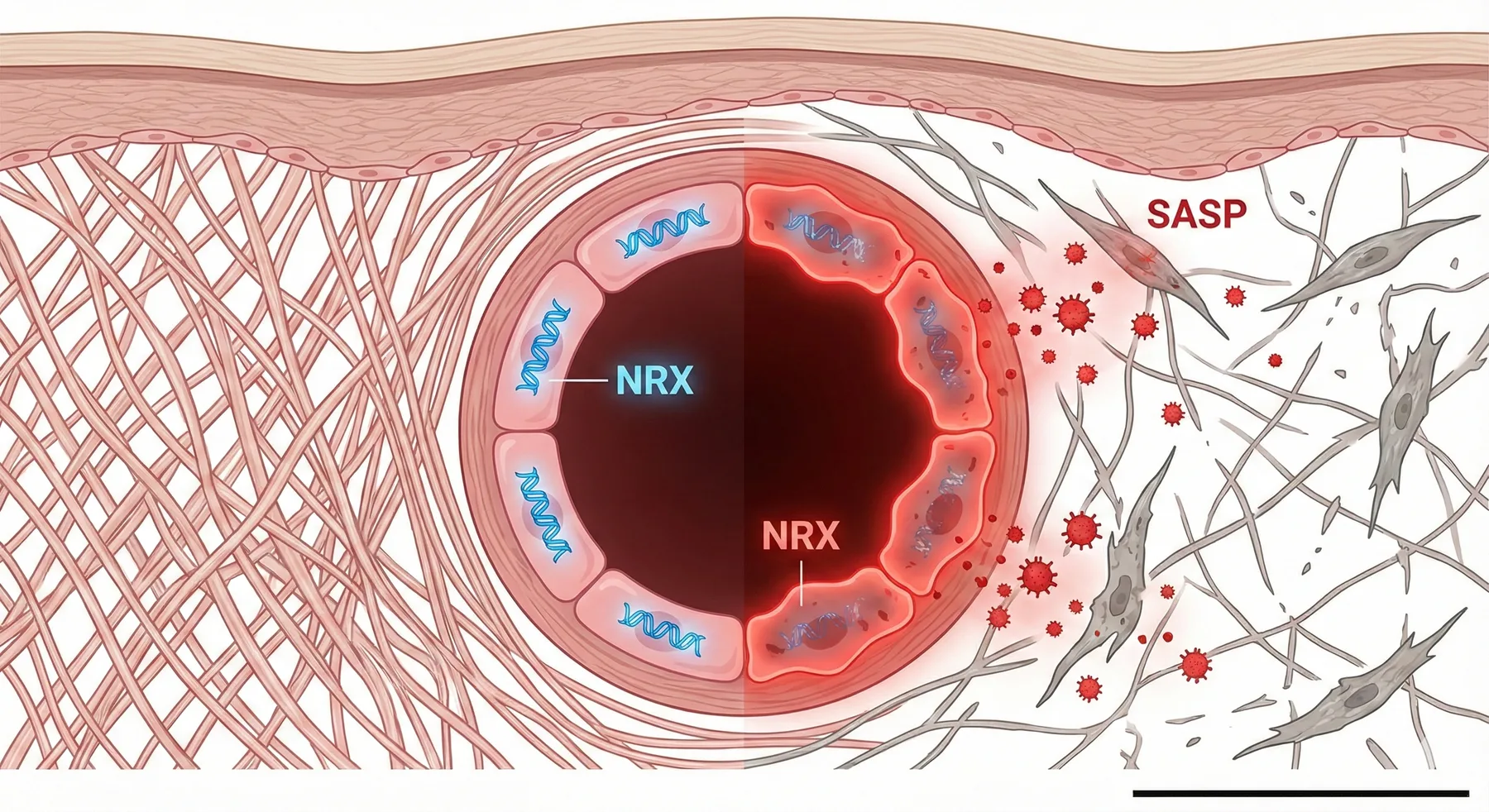
This program tests whether endothelial senescence and associated regulatory programs act as upstream contributors to dermal aging rather than passive consequences of tissue decline.

Question

What makes aged skin less repairable?

The project tests whether senescent endothelial programs actively reshape fibroblast behavior and extracellular matrix maintenance.

Model

Human skin and endothelial senescence

Single-cell datasets, clinical samples, endothelial culture, and fibroblast co-culture map vascular niche behavior.

Computation

Single-cell mapping to target nomination

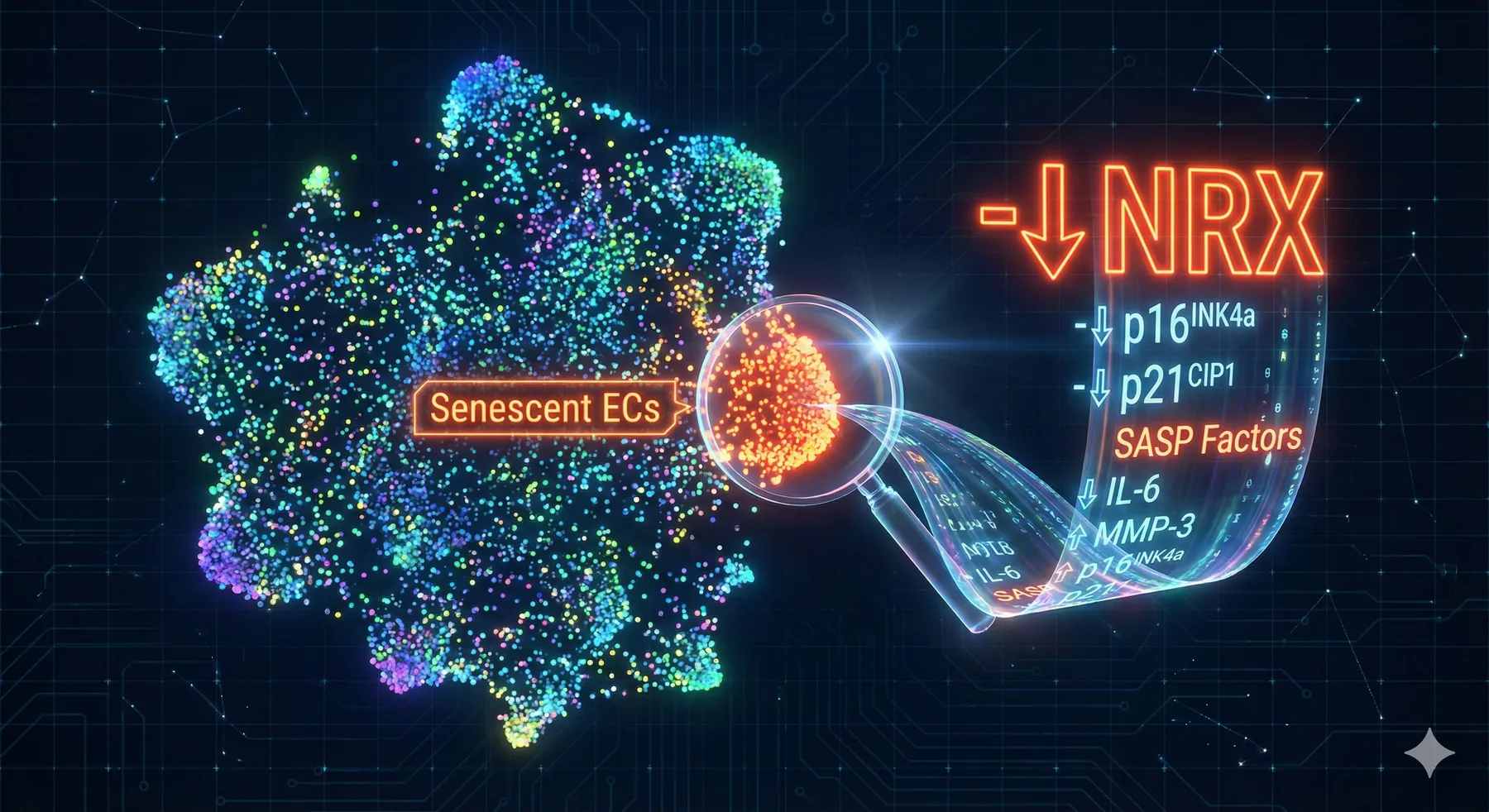
scRNA-seq reanalysis maps senescence-associated endothelial states, inflammatory secretome programs, and candidate crosstalk signals.

Translation

Vascular normalization and repair

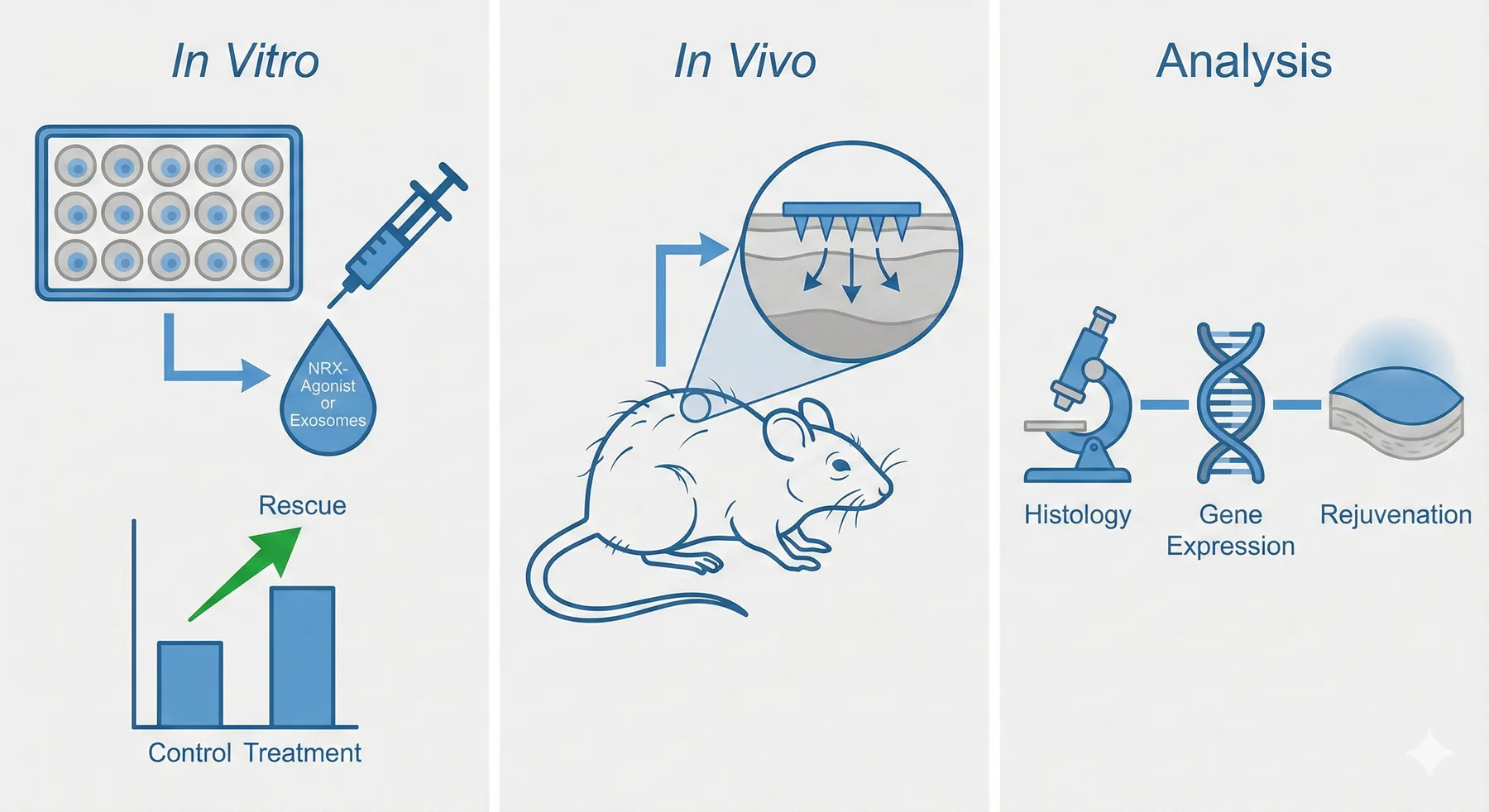
Small molecules and engineered exosomes are explored as ways to restore vascular support and improve dermal regeneration.

Validation route

Discovery starts from public and clinical single-cell profiles, moves into mechanistic validation of senescence-associated endothelial states, then returns to intervention models for skin aging and wound repair.
Single-cell skin aging analysis Endothelial mechanism workflow
中文摘要

本项目聚焦微血管在皮肤衰老中的主动作用,研究内皮细胞衰老及其相关调控程序失衡是否可能参与真皮老化。研究整合单细胞转录组、临床样本验证和分子生物学模型,绘制血管-皮肤轴的调控网络,并探索血管正常化与真皮再生的干预策略。
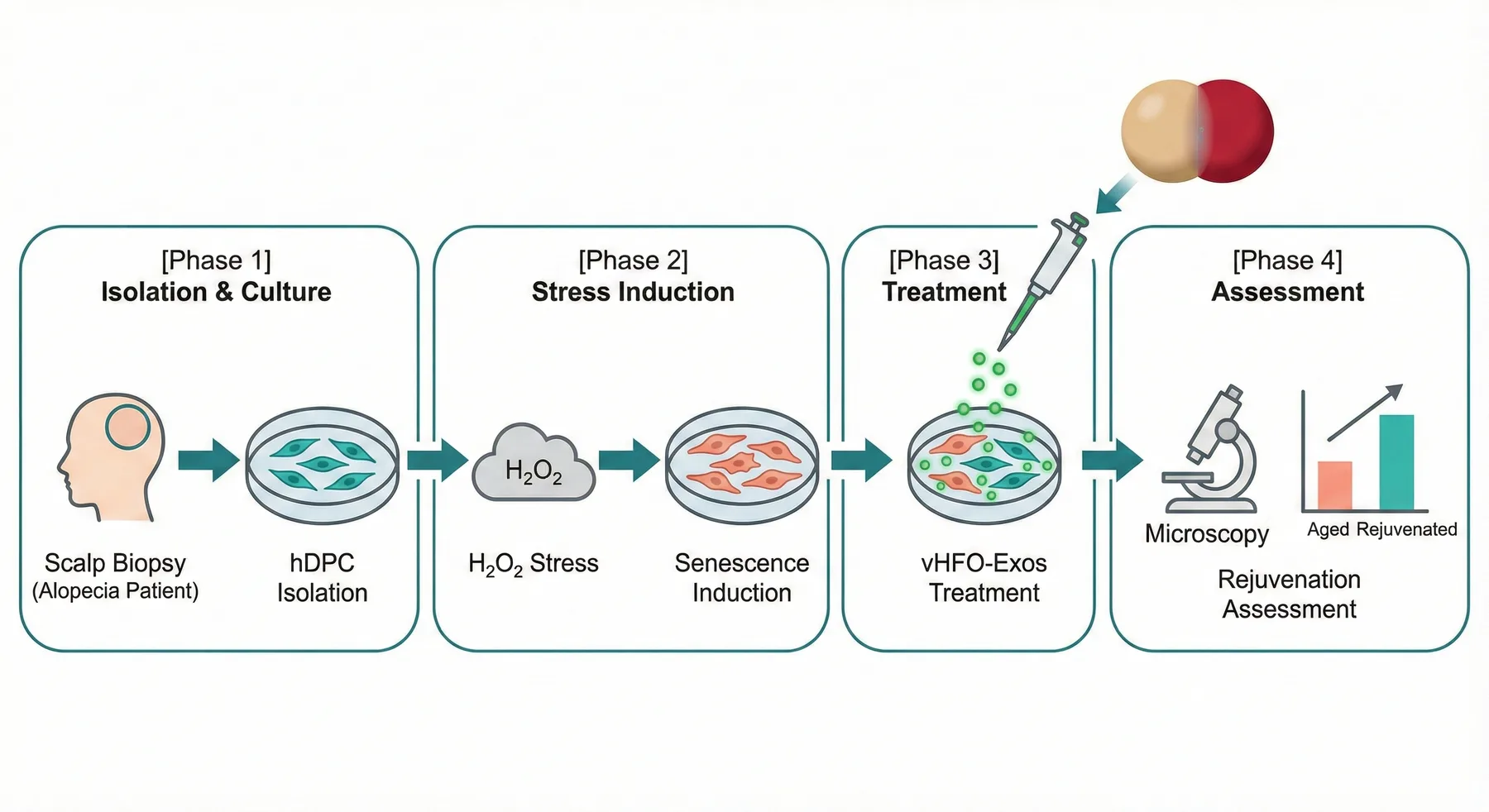
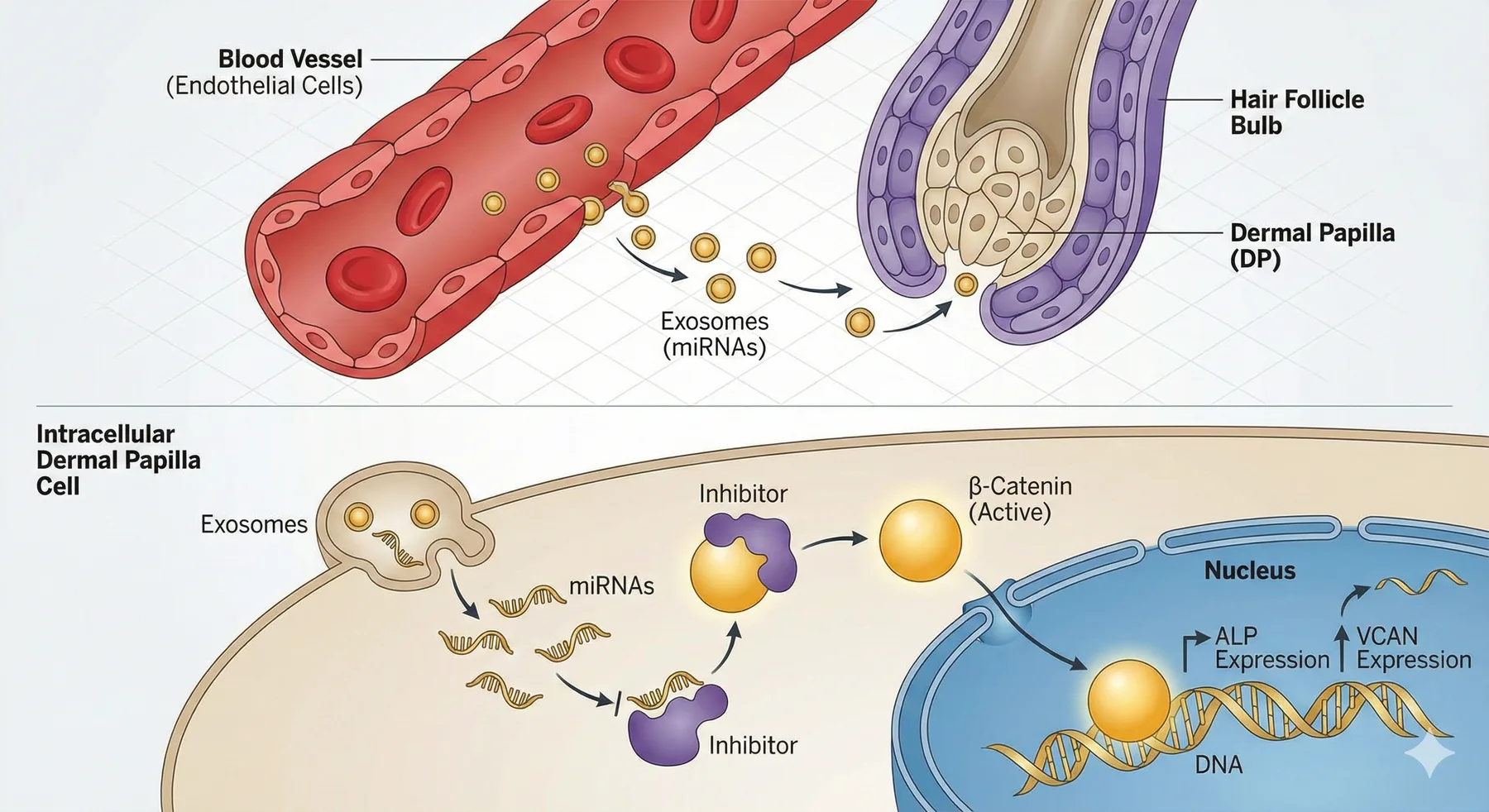
Restoring angio-follicular crosstalk

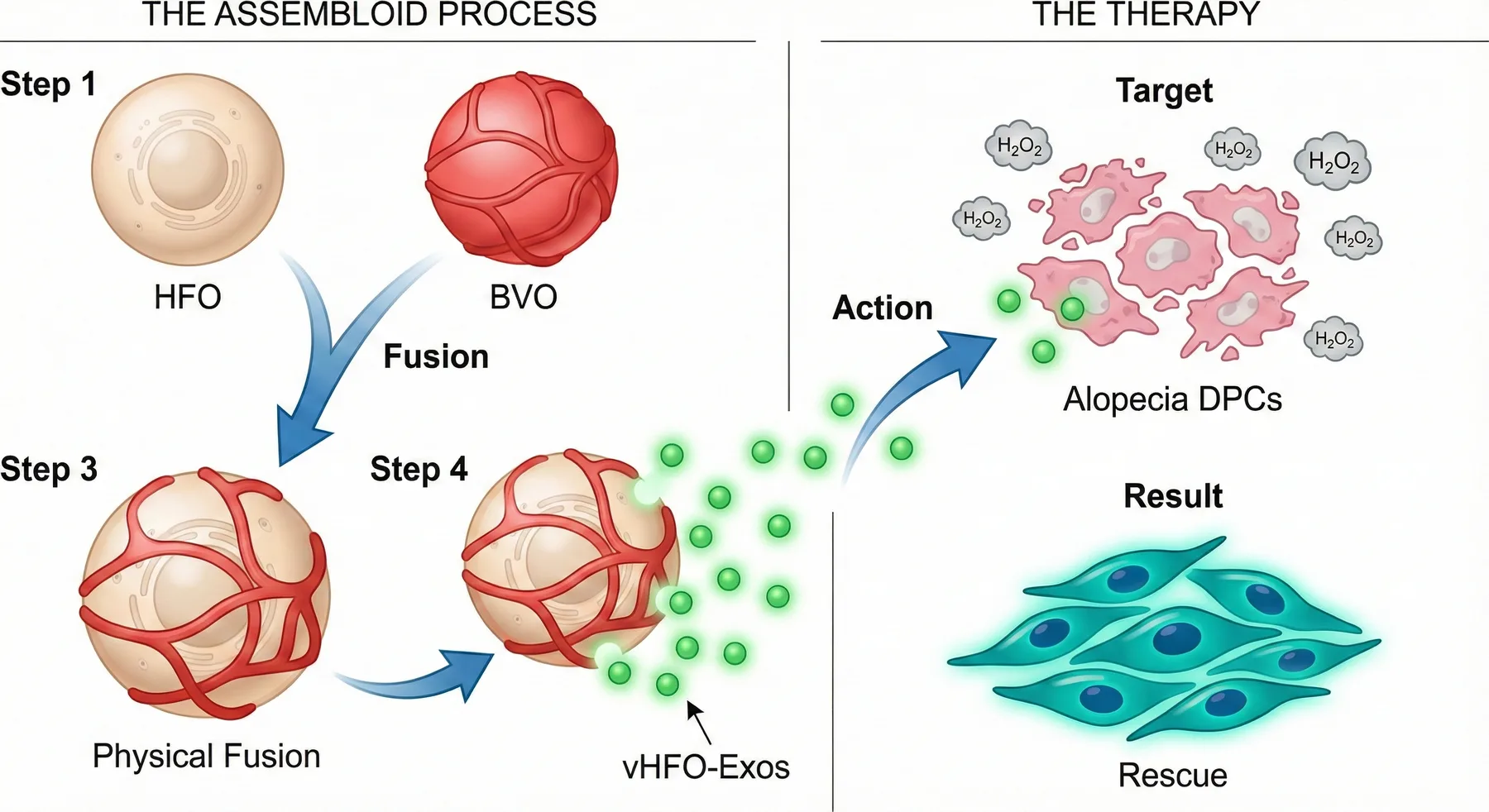
A vascularized assembloid strategy is used to study how vascular signals may reverse senescence in alopecia-derived dermal papilla cells.

Question

Can a vascular niche rescue follicle aging?

The project asks whether vascularized hair follicle assembloids can restore missing signals in androgenetic alopecia models.

Model

vHFO assembloids and patient DPCs

Human hair follicle organoids and blood vessel organoids are fused, then tested against oxidative stress models of DPC senescence.

Computation

Multi-omics signal discovery

RNA-seq and proteomics screen vHFO-derived exosomes for angiocrine factors and miRNAs linked to Wnt and antioxidant rescue.

Translation

Exosome-guided follicle repair

vHFO-Exos are evaluated for their ability to restore proliferation, ALP, Versican, and hair-inductive properties in aged DPCs.

Experimental route

The workflow combines assembloid construction, patient-derived DPC stress modeling, exosome profiling, and functional validation of senescence reversal.

vHFO experimental design vHFO cellular mechanism
中文摘要

本项目针对雄激素性脱发中毛乳头细胞衰老和功能微型化问题,构建血管化毛囊组装体,并利用其来源外泌体研究血管-毛囊对话如何影响 DPC 衰老逆转。核心路线包括 vHFO 构建、AGA 患者来源 DPC 氧化应激模型、多组学筛选和功能验证。

Next validation layers

The next pass connects spatial proximity, clinical sampling, and intervention response into a tighter evidence chain.

Spatial Transcriptomics

Profile senescence-associated endothelial niches in situ and test their proximity to senescent fibroblast states.

Clinical Validation

Expand human skin biopsy validation across ages and test whether endothelial-state features can support diagnostic or therapeutic stratification.

Bio-Assistant

Please enter access password: